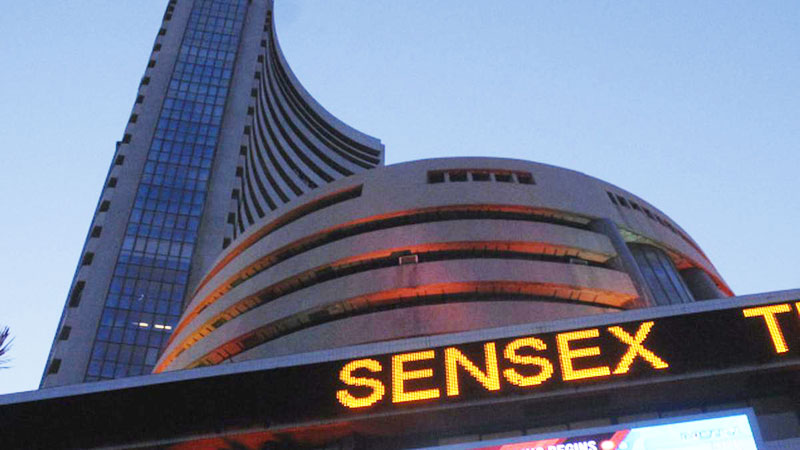
India's BSE Sensex reversed early losses to close about 0.3% up at 83,580 on Friday, in a late recovery supported by selective buying in FMCG and private banking stocks, while the heavyweight IT sector continued to lag. Sentiment steadied following a volatile week, buoyed by a surprise US-India trade agreement and the RBI’s decision to keep its policy rate unchanged. The RBI’s policy announcement was broadly in line with expectations, maintaining a neutral stance while reiterating a constructive growth outlook. Among individual stocks, ITC (+5.2%) led the way, tracking other cigarette stocks, following reports of fresh price hikes and strong Q3 earnings, which eased fears around the recent excise duty increase effective from February 1. Kotak Bank, HUL, Bharti Airtel, Bajaj Finance, and Bajaj Finserv were also among the top performers, adding up to 3.4%. Conversely, TCS (-1.8%), Tech Mahindra (-1.7%) and Adani Ports (-1.3%) posted the biggest losses. For the week, the index rose 1.6%.
The Dow closed at a record high on Friday, surging 2.5% as US equities staged a broad based snapback after a bruising tech led selloff earlier in the week, with dip buying returning as fears around near term AI disruption and forced deleveraging eased. The S&P 500 jumped 1.9% and the Nasdaq rose 2.1%, led by a sharp rebound in semiconductors, with Nvidia, Broadcom, and AMD surging over 7% each as investors selectively rebuilt exposure after steep declines. Cyclicals outperformed, with Caterpillar and Goldman Sachs gaining 7.1% and 4.3%, reinforcing a rotation toward value and economically sensitive sectors. Despite Friday’s surge, the Nasdaq still ended the week down 1.9%, reflecting lingering caution around elevated valuations, heavy AI capex commitments, and earnings execution risk, with Amazon extending losses by 5.6% after reaffirming plans for $200 billion in AI investment. The S&P 500 finished the week 0.1% lower, while the Dow advanced 2.6%/